

How do I choose the right snowboard boots?
If you want to snowboard well, it goes without saying that you need to be comfortable in your boots! They will enable you to tackle the slopes effectively based on several criteria. You will need to consider your shoe size, your skill level, and your riding style in order to choose the right boots and lacing system.
What size snowboard boots should I choose?
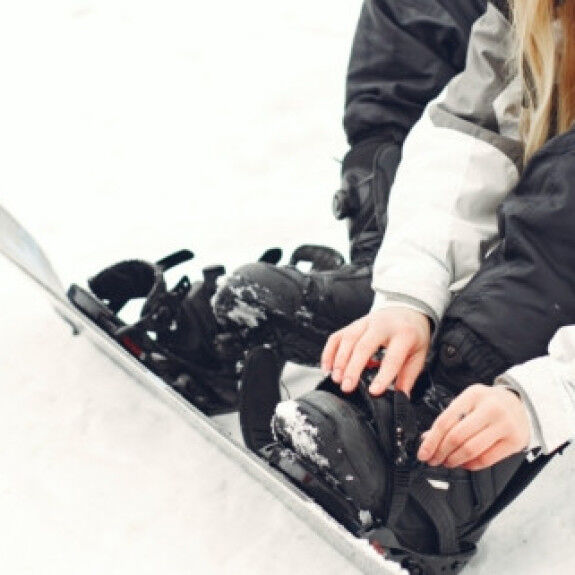
Choosing the right size for your boots depends primarily on your shoe size. This will also determine the width of your snowboard! To find out more, read our article: how to choose your snowboard size.
Snowboard boot size chart
Whether you're looking for boots or ski shoes, you'll need to use the Mondopoint size chart. Mondopoint is a scale that corresponds to your shoe size in cm. The size chart is the same for men, women, and children. Add 1 cm to your shoe size and then look up the equivalent in Mondopoint. Please note, however, that sizes may vary depending on the manufacturer.
| size | 25 | 26 | 27 | 28 | 29 | 30 | 31 | 32 | 33 | 34 | 35 | 36 | 37 | 38 | 38.5 | 39 |
| mondopoint | 15 | 16 | 17 | 17.5 | 18.5 | 19 | 20 | 20.5 | 21 | 21.5 | 22 | 22.5 | 23.5 | 24 | 24.5 | 25 |
| Size | 40 | 40.5 | 41 | 42 | 42.5 | 43 | 44 | 44.5 | 45 | 45.5 | 46 | 47 | 47.5 | 48 | 48.5 | 49 | 50 | 51 |
| mondopoint | 25.5 | 26 | 26.5 | 27 | 27.5 | 28 | 28.5 | 29 | 29.5 | 30 | 30.5 | 31 | 31.5 | 32 | 32.5 | 33 | 33.5 | 34 |
Note: To measure your foot, simply take a ruler, a sheet of paper, and a pen. Stand against a wall and place your foot on the sheet of paper. Lean your ankle slightly forward as you would on your snowboard and measure your foot using the ruler and pen!
How do you know if you've made the right choice?
Size isn't everything when choosing a pair of snowboard boots! You'll need to try the boots on before buying them. Why? Boot sizes vary depending on the brand, and you need support, so some models may not be right for you. It's therefore essential to try the boots on and check several criteria:
- room for your toes: Be sure to try on the boots with your snowboard socks to avoid any unpleasant surprises. Press your heel against the back of the boot. Your toes should not touch the front of the boot once you have fastened it properly. If they do, your boots are too small. On the other hand, if you have a little room, they're fine!
- good support: Your foot and ankle should be well supported without the boot being too tight. If it is too tight, your foot will be compressed without the support you need.
Note: If the boot is good but you feel some pressure points on the sole of your foot, you can use an insole. This will allow you to be comfortable and pain-free, even after hours on the slopes!
Thermoforming
It is possible to have boots that are 100% adapted to your feet thanks to the technique of thermoforming your boots. To have your boots thermoformed, you need to go to a store to have your feet measured. This service is available in our stores.
Thermoforming allows your liner to take the exact shape of your foot and thus be completely customized. A thermoformed liner permanently retains the shape of your foot. You can repeat the process up to about three times on the same pair. In any case, ask one of our sales staff for personalized advice.
Note: It is important to remember that if you already feel comfortable in your boots when you try them on, you do not necessarily need to thermoform them. Thermoforming is especially useful when you have a pressure point that could prove uncomfortable.
You can read our article on boot fitting for more information.
How important is stiffness when choosing snowboard boots?
One of the most important dimensions in choosing your snowboard boots is "flex", the rigidity of your equipment. The more flexible a pair, the easier it is to bend the boots. This will also help you negotiate turns. There are three types of flex, from soft to rigid to medium.
Soft flex |
Medium flex |
Rigid flex |
|
A soft flex on your boots makes it easier for beginners to negotiate the first few turns. It gives the wearer comfort and good cushioning. Soft flex is also appreciated by freestyle skiers, who will negotiate landings more pleasantly and easily. |
Boots with a medium flex are versatile. This flex will give riders with more bottle more control, while retaining suppleness. As a result, the boot's more advanced support provides greater maneuverability. | As with snowboards, if you're a high-speed rider, a rigid flex is just right for you! A rigid flex gives you maximum control for beautiful, full-power turns. |
Snowboots: which tightening system to choose?
Not all boots have the same type of tightening system. The laces on snowboard boots are very important to ensure that you're well supported and comfortable. So here we look at the different lacing systems for your snowboard boots.

Traditional lacing
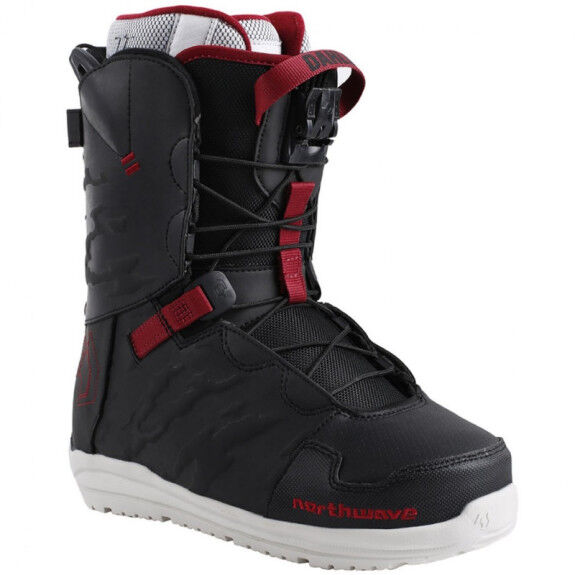
Traditional lacing for snowboard boots is undoubtedly the simplest and most effective system. If you know how to tie your boots, you know how to use this system. Traditional lacing is precise and practical because you can tighten the different zones as you like. It's also very practical because it's easy to replace, simply by changing the laces. This type of lacing does have one drawback, however: ittakes a long time to do.
Quick lacing
For faster foot support than traditional lacing, opt for quick lacing. The laces are tightened by pulling the thin laces through the top of the boot, which has a tightening system. This type of lace provides a lasting hold in just a few seconds. Some systems have two tightening zones, top and bottom. Some models also have quick-release fastenings for the liner. In short, quick lacing your boots saves time and ensures a good fit.
Boa® lacing
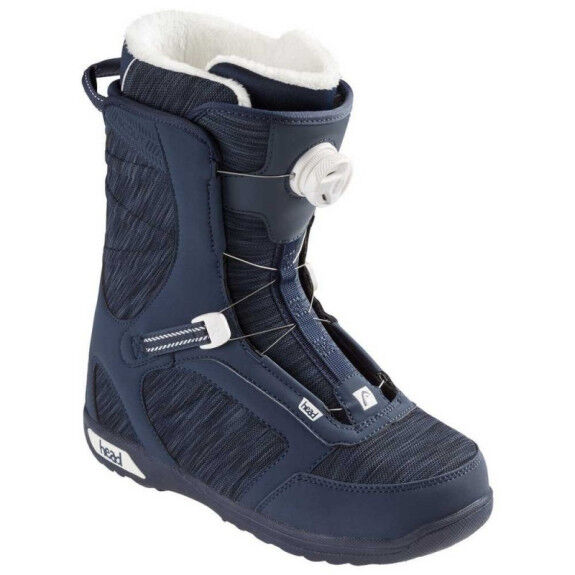
The new Boa® system replaces laces with thin cables that tighten the boot thanks to a mechanical retractor. With Boa lacing, you tighten the boot with a knob on the top of the shoe. Turn clockwise to tighten, anticlockwise to loosen. This system is extremely fast and precise for optimum support. You can often have separate lacing with the Boa lacing system, which is explained below.

Separate lacing
Dissociated lacing has several tightening zones for optimum support without one part being too tight and another too loose. It can be used for all types of tightening, but can refer to several different elements. For example, boots have a Velcro fastening on the front for extra rigidity. This scratch will be appreciated by intermediate to advanced snowboarders looking for maximum support and manoeuvrability. On other models, the top of the boot and the bottom will each have an independent lacing system. This type of lacing allows you to adjust your boots with precision to provide the ideal support for your foot shape .
Type of riding and level: 2 important criteria for choosing your snowboard boots
Because we all practice winter sports differently, the different types of boots adapt to what you do with them! A freestyle snowboarder and a freerider, like a skier or snowboarder, won't buy the same boots. The same goes for different levels of ability: a beginner's approach is clearly different from that of an expert.
Choosing boots according to your skiing style
There are three types of ski or snowboard program. These will determine which snowboard to choose, and therefore the type of boots you'll need.
|
|
|
| For All-Mountain, you'll need a pair of boots that can hold their own both on the slopes and on other terrain. Versatile boots are essential for good control and flexibility. A medium flex will enable you to initiate turns with ease, while being fast on the downhill. | When you're doing a lot of freestyle tricks, you need a lot of flexibility for optimal landings. However, if you want to have more maneuverability, you can take boots with a slightly less flexible flex or even a medium flex, which will be more versatile. In this way, you'll retain a minimum of suppleness but more maneuverability. | If you're into powder and exploring off the beaten track, you'll need boots to match. Freeride-specific pairs are available. They're rigid for great support and highly waterproof. These boots keep you dry even when covered in powder! |
Whatever you do, don't forget to wear a helmet for your own safety! If you don't know how to choose the right helmet, read our article: How to choose the right ski or snowboard helmet?
Level of ability
The snowboarder's level also determines which boots he'll need. In fact, as with the choice of skis or snowboards, a beginner and an expert will not buy the same type of boot.
Beginner
You're just starting out on the slopes, or you ride occasionally but aren't very confident. You need a pair of snowboard boots that give you support and freedom of movement. A soft flex will enable you to negotiate turns with good cushioning. And don't forget to choose a simple tightening system, so as not to complicate your life on the slopes.
Intermediate
You're comfortable on the slopes, and you're happy to ride all over the mountain. Slightly stiffer boots will give you more control over your turns. With a medium flex, you can handle the board better. On the other hand, if you're into freestyle, stick with a soft flex to cushion your jumps.
Confirmed
The mountains hold no secrets for you, whether on the slopes or in the wilderness, and you ride everywhere with ease. The type of boots you choose will depend on your riding style. If you're a freestyle rider, you'll need to keep the flex of your boots at a minimum to be able to perform great tricks. On the other hand, if you're a high-speed rider, you'll need a rigid boot to be able to initiate nice turns and have as much control as possible
To conclude, to choose your snowboard boots you need to take into account :
- Your shoe size,
- Your preferred tightening system,
- Your snowboarding program,
- Your level.
Now you can hit the slopes with confidence! For further advice and information, our entire team is at your service.

During your holidays in the Massif Central, don't miss the Ardèche Gorges! Swimming and breathtaking views are guaranteed!

Discover Osprey backpacks, an established and renowned range on sale at Speck Sports.
Travel light and practical with the Deuter Aviant Access Pro, perfect for a weekend or a few days away.
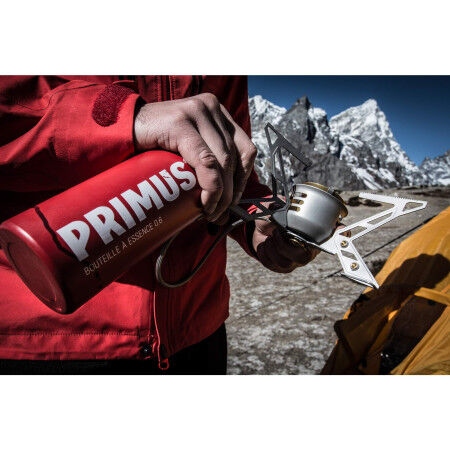
Primus stoves combine quality, performance and reliability for your outdoor adventures. Find your ideal model now with our advice!