
Low-cut, mid-cut, or high-cut hiking boots?
This is the first visible and key factor to consider when choosing your hiking boots. The height of the upper—that is, the top part of the boot that wraps more or less around the ankle—directly affects foot support, freedom of movement, and the type of terrain you’ll be hiking on.
Low-cut hiking boots
Low-cut hiking boots resemble reinforced trail running shoes. They end just below the ankle, which gives them remarkable lightness and flexibility. You walk naturally, your foot moves freely, and muscle fatigue from wearing the boots is kept to a minimum.
This type of shoe is perfectly suited for day hikes on well-marked trails, non-technical terrain, and hikers who prioritize lightness. It’s also ideal for summer hikes on dry trails, where foot ventilation takes precedence over protection. If you’re just starting out hiking on forest trails or well-marked GR trails, the low-cut design will provide you with much-appreciated immediate comfort.
On the other hand, low-cut boots do not provide ankle protection on rugged terrain. On scree, steep descents, or when carrying a heavy backpack, the lack of lateral support can increase the risk of sprains. This is an important trade-off to keep in mind before making a purchase.
Mid-cut (or intermediate) boots: the ideal compromise
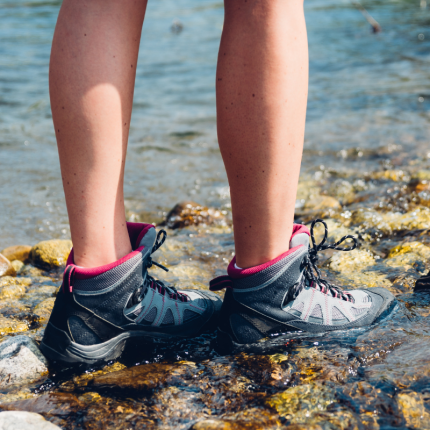
The mid-cut shaft reaches up to the ankle without extending beyond it. It offers partial support that protects without restricting movement. This is the most versatile category on the hiking market, and by far the best-selling at Speck Sports.
The mid-cut boot is suitable for a very wide range of users: the weekend hiker who goes on varied outings with moderate to significant elevation gain, the hiker carrying a 10- to 15-kilo pack for a day hike, or the hiker who tackles different types of terrain in a single outing. It combines the relative lightness of a low-cut boot with sufficient ankle support for the vast majority of hikes.
For families looking for a versatile shoe that can be used year-round on most mountain trails, the mid-cut is the smartest choice. A single high-quality model covers 80% of uses without any major compromises.
High-cut boots for maximum protection
High-cut boots extend above the ankle and provide maximum foot support. They are the go-to choice for multi-day treks with a heavy pack, technical high-mountain terrain, winter hikes, and challenging outings on scree or loose rock.
The high shaft effectively protects the ankle from twisting, supports your joint under the weight of the pack, and provides better thermal insulation—which is crucial as temperatures drop at higher altitudes. The trade-off is a heavier weight and a necessary break-in period over the first few kilometers. High-cut boots require a gradual break-in period before they become perfectly comfortable.
? GOOD TO KNOW: The more technical the terrain and the heavier your pack, the more the high-top design will be your ally. For a light hike on a family-friendly trail, low-top or mid-top boots are more than sufficient and will be much more comfortable right from the start.
5 Criteria for Choosing Hiking Boots
Beyond the height of the upper, there are five technical features you should consider when making your choice. Let’s take a look at how to evaluate them to ensure you make the right purchase.
1. The sole of a hiking boot
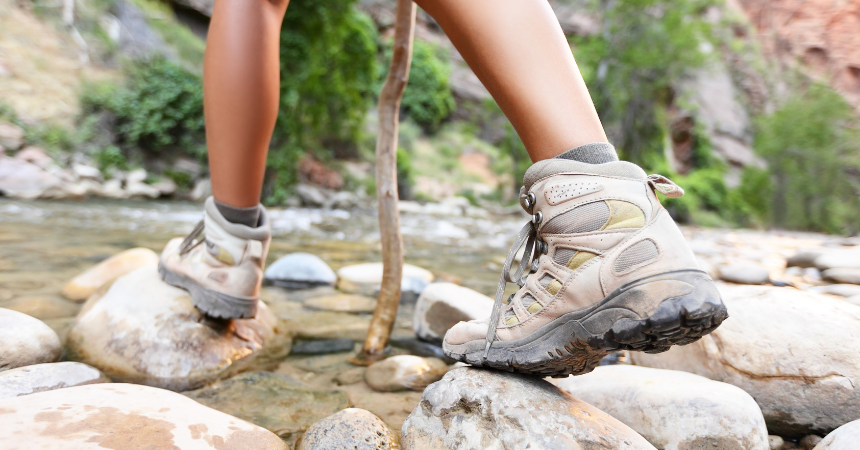
The sole of a hiking boot consists of two distinct parts that should not be confused. The outsole, which is in direct contact with the soil, provides traction and grip. The midsole, located between the outsole and the arch of the foot, provides cushioning and protects your joints.
For the outsole, look for well-designed lugs and a grippy rubber compound. Vibram soles are the industry standard for hiking: they grip on dry or wet rock, wet grass, and loose soil. The deeper and more widely spaced the lugs are, the better the sole grips on muddy terrain, but it will perform less well on smooth rock, where a softer, denser rubber compound is preferable.
The stiffness of the sole also plays an important role. A stiff sole protects the arch of the foot on rocky terrain by preventing stones from digging painfully into the sole of the foot. A more flexible sole offers better ground feel and is suitable for less technical trails. In general, the more challenging and technical the hike, the stiffer the sole should be.
When it comes to cushioning, cushioned soles provide good comfort on long hikes, especially for heavier hikers or those with joint issues. On short, light hikes, moderate cushioning is sufficient. Note that excessively thick cushioning reduces ground feel and can cause instability on technical sections.
2. Waterproofing: Gore-Tex or a membrane?
Waterproofing and breathability are topics that deserve a thorough explanation, as there’s a lot of conflicting information out there. A waterproof membrane—the best-known being Gore-Tex, a single-layer fabric that is both waterproof and breathable—creates a barrier between your foot and external moisture. Rainwater, dew on the grass, or soggy terrain cannot penetrate it.
Waterproof hiking boots with a Gore-Tex membrane are recommended for all-season outings, humid mountain environments, and hikers whose feet are particularly sensitive to the cold. In the fall, winter, and in mountain ranges prone to precipitation, this is often the most comfortable choice.
The trade-off is simple: a waterproof membrane reduces the shoe’s breathability. Water vapor produced by perspiration escapes more slowly, which can lead to a feeling of heat and dampness on long summer hikes or for people who sweat heavily from their feet. This isn’t a deal-breaker, but it’s a factor to consider.
Shoes without a membrane—made simply of leather or untreated synthetic material—breathe much better. They also dry faster if they get wet. For summer hikes in low-humidity areas, they may be preferable to Gore-Tex in terms of thermal comfort. Protection against moisture is then provided by a water-repellent surface treatment—that is, a chemical treatment that causes water to bead up on the fabric’s surface—which must be reapplied regularly with a suitable spray.
⚠️ WARNING: A waterproof membrane does not keep your shoes waterproof indefinitely. If you cross a stream or walk through deep snow, water will enter from the top. Waterproofing protects against rain and ambient moisture, not submersion.
3. Foot Support and Comfort
Foot support is essential for preventing injuries and ensuring your long-term comfort. It comes into play on several levels in a hiking shoe.
The heel counter—the rigid part at the back of the shoe—must hold the heel firmly in place without causing friction. A heel that isn’t properly supported is a surefire recipe for blisters within the first few hours of walking. Check to make sure your heel doesn’t slide upward when you stand on your tiptoes.
The lacing system determines the precise fit of the shoe. Many hiking boots feature classic eyelets supplemented by hooks in the upper section to make lacing easier while wearing gloves. This system allows you to tighten different areas of the foot independently—the midfoot, top of the foot, and ankles—to achieve a truly customized fit.
Rubber reinforcements at the toe and along the sides protect high-friction areas from rocks. They also enhance the shoe’s overall durability. On a technical hike, these reinforcements allow you to place your foot on small rock holds without damaging the upper.
4. Materials: Leather or Synthetic?
The debate between leather and synthetic materials comes up regularly. Both have their supporters, and for good reason…
Full-grain leather is the traditional material for hiking and serious trekking boots. It is extremely durable, abrasion-resistant, and naturally breathable. With regular care using leather conditioner or wax, the leather develops a natural water resistance and gradually molds to the shape of your foot. A good pair of full-grain leather shoes can last ten to fifteen years with proper care. It’s an investment that’s well worth it for avid hikers or trekkers.
The downside of leather is its weight and the break-in period. Thick leather can be stiff at first and may require about ten outings before it becomes perfectly comfortable. It’s also harder to clean than synthetic materials.
Synthetic materials—such as nylon, polyester, and microfiber—offer immediate lightness and comfort from the very first kilometers. They dry faster, weigh less, and modern technologies provide very satisfactory abrasion resistance. On the other hand, they generally wear out faster than leather and offer less durability over the long term.
For beginners and occasional hikers, synthetic materials are often the most practical choice. For regular and intensive hikers, leather or nubuck leather remain the gold standard over the long term.
5. The Weight of the Shoe
The weight of the shoe directly affects how tired you get over time. It’s often said that one kilogram on your feet is equivalent to five kilograms on your back in terms of muscular effort; this may be a slight exaggeration, but the idea is accurate. On a long hike, heavy shoes tire your legs out faster.
Lightweight hiking boots, weighing between 350 and 500 grams per boot, prioritize mobility and are suitable for day hikes on moderate terrain. Sturdy trekking boots can weigh up to 600 to 800 grams per shoe—a weight justified by their level of protection, stiffness, and durability for challenging hikes with a heavy pack.
The right balance between weight and protection depends on your intended use. There’s no point in wearing 700-gram boots for a three-hour walk on an easy trail—you’ll just tire yourself out unnecessarily. Conversely, setting out on a five-day high-mountain trek with lightweight 400-gram boots poses a real risk in terms of protection and durability.
The Ideal Shoe for Each Type of Hike
First and foremost, you need to ask yourself what you’ll be using them for. At Speck Sports, we categorize needs into four main profiles to help you make the right choice.
Family Outings and Occasional Hiking
Do you go hiking with your family a few times a year on marked, well-maintained trails with little elevation gain? The priority here is immediate comfort—no break-in period required—and acceptable versatility across different terrains. A low- or mid-cut shoe made of lightweight synthetic material, with a Gore-Tex membrane to protect against unpredictable weather, is the ideal choice for this profile.
For children, ankle support is particularly important because their muscles aren’t yet fully developed. Opt for mid-cut models with a good heel counter, and choose a half size larger to allow for growth and swelling of the foot during physical activity.
A family planning a week of hiking in the Vosges, with 10- to 15-kilometer stages on well-marked trails, doesn’t need high-altitude trekking boots. A waterproof mid-cut boot that’s lightweight and comfortable from day one, with a grippy outsole, will be perfect for this type of trip. At Speck Sports, we’ll help you find the right model for every member of the family.
Day Hikes
Do you hike regularly and are you looking for elevation gain, varied terrain, and 6- to 8-hour outings? Long-lasting comfort, ankle support, and traction on technical terrain become top priorities.
A mid-cut upper made of nubuck leather or high-quality synthetic material, with a Gore-Tex membrane, a stiff Vibram sole, and good cushioning, is the winning combination for this type of hiker. You need a boot that lasts, protects you on technical sections, and stays comfortable when your legs start to feel heavy at the end of the day.
Multi-Day Trekking
Are you planning a multi-day self-guided trek, carrying a 15- to 20-kilo pack, spending nights in mountain huts or tents, and facing unpredictable weather conditions? The demands go up a notch.
For this type of technical hike, a high-top boot is essential. It supports the ankle under the weight of the pack, provides better insulation against the cold at night, and offers protection on the most challenging terrain. Full-grain leather or thick nubuck provides the durability needed to withstand hundreds of kilometers. The sole must be sturdy and rigid for rocky sections. Waterproofing is essential, but make sure the membrane is breathable enough for intense exertion.
Winter Hiking and Challenging Outings
Snow, black ice, sub-freezing temperatures, alpine winter conditions: hiking in winter requires specialized boots with serious thermal insulation, complete waterproofing, and sole stiffness compatible with lightweight crampons.
For these conditions, make sure the model you’re considering is compatible with removable crampons if you plan to hike on hard snow or ice. The sole must have notches at the front and back, or be stiff enough to hold the crampons in place. Thick leather and thermal membranes such as Thinsulate provide valuable insulation.
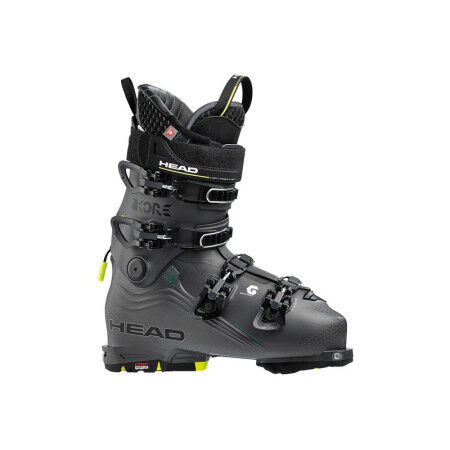
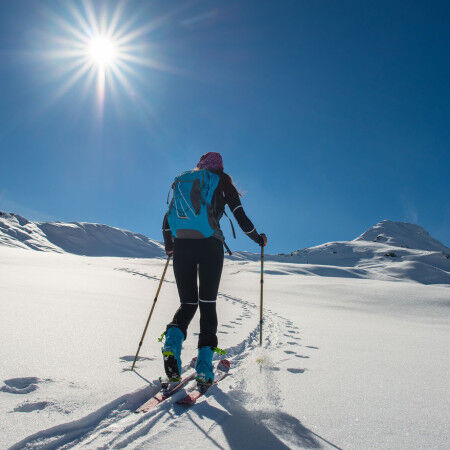
⚠️ WARNING: For challenging winter hiking or mountaineering, standard hiking boots are not sufficient. You should opt for specific mountaineering or ski touring boots. Feel free to consult our in-store team to avoid putting yourself in danger with unsuitable gear.
Our Tips for Trying On Hiking Boots Properly
This is an absolutely crucial step that many hikers overlook, especially when shopping online. Hiking boots must fit perfectly right from the start—there’s no such thing as a “break-in period” that can fix a poor fit.
The Best Time to Try Them On
Try on your hiking boots at the end of the day, when your feet are slightly swollen from the heat and standing. Bring your usual hiking socks, as their thickness directly affects how roomy the boot feels inside. A thin, everyday sock completely skews the fit.
Allow at least twenty minutes to try on several models. At Speck Sports, we have an inclined test ramp that simulates ascents and descents—this is essential for evaluating how the shoe performs in real-world conditions.
Key Points to Check
The space in front of your toes is the first thing to check. While standing and simulating a descent, you should feel about one centimeter of space between your big toe and the tip of the shoe. Your toes should never touch the toe box. If they do, your toenails will suffer during descents, and you’re guaranteed to end up with black toenails after just a few hikes.
The heel must be completely secure. Once laced up, test the heel by standing on your tiptoes several times: your heel should not lift off the ground. A heel that slips causes blisters with mechanical regularity, especially on the back of the heel. If the heel moves, the shoe is too big or poorly shaped for your foot.
The midfoot must be well supported, without feeling overly compressed. The lacing system should allow for gradual adjustment from the toe to the ankle to ensure optimal support zone by zone. If you’re hiking in winter, wear gloves to check that the lacing system remains easy to use.
Simulate a descent by leaning forward on the fitting ramp: your toes should not hit the toe box. Also take a few side-to-side steps to test the ankle support during lateral movements.
The Question of Shoe Size
Always choose a half to a full size larger than your usual street shoe size. There are several reasons for this: your feet swell during physical activity and in the heat, especially on long summer hikes. On descents, your foot slides slightly forward, and without enough space, your toes will slam against the front of the shoe. Thick hiking socks also reduce the interior volume.
Your “comfort size” for hiking is therefore generally larger than your usual shoe size. Many hikers are unaware of this and are then surprised to experience toe pain.
Invest in good hiking boots…
There you go—you now have everything you need to choose your hiking boots with confidence. Shaft height, sole, waterproofing, materials, weight: the right choice depends above all on how you’ll be using them on the trail.
Can’t decide between two models? Do you have a specific plan in mind? Stop by our store—we’d love to help you find the perfect hiking boot!