
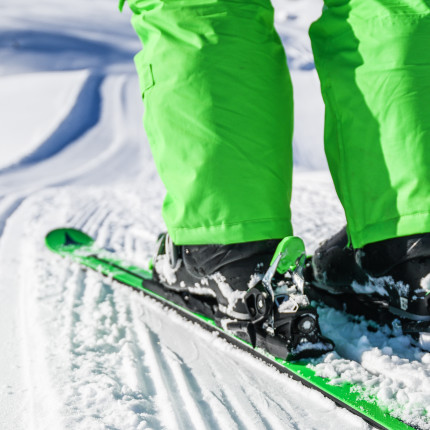
How do I choose my ski bindings?
Ski bindings are essential to guarantee your safety and comfort on the slopes or off-piste. At Speck-Sports, we've put together a guide to help you choose the rightski bindings, whether you're looking to buy alpine skis, touring skis or cross-country skis.
How do ski bindings work?
Which ski binding to choose for your skiing
Ski bindings are essential for both safety and performance in this exciting sport. There are several types of bindings for different disciplines, each with its own characteristics and advantages.
Rail-mounted ski bindings
Rail-mounted ski bindings offer great versatility and are compatible with most ski boot sizes. These bindings are designed with an integrated rail to which the boot is securely attached. This system allows quick and easy adjustment of the boot's position on the ski, offering greater adaptability to the skier's individual preferences.
Alpine ski bindings
Alpine ski bindings are primarily designed for skiing on groomed slopes. They are lightweight, comfortable and slightly forward-tilted, which facilitates edge grip. These bindings offer excellent power transmission, enabling skiers to effectively control their turns and speed. What's more, they are responsive and provide a secure hold on the boot, ensuring a solid connection between skier and ski.
Touring ski bindings
Touring ski bindings feature front spikes that hold the boots in place while freeing the heel. When descending, they lock into place and operate on the same principle as alpine ski bindings.
These bindings are distinguished by their efficient lateral transmission and high elasticity. They are designed to be closer to the skis, promoting contact with the snow and a floating sensation. If you're a freerider or freestyler, the elasticity of the bindings is essential to absorb shocks. In freerando, it's best to opt for disengageable bindings, which are safer on descents and free up the heel on ascents.
Touring bindings with clamps have no DIN adjustment at the front (with a few exceptions, such as Fritschi's VPEC Evo 12 or Tecton 13). DIN adjustment is only possible at the rear of the binding. There is an adjustment to be made for rotational release, and on some bindings a DIN adjustment is possible for frontal drops.
There are also hybrid bindings, compatible with both alpine skiing and touring. They offer an interesting balance between lightness and robustness.
Cross-country bindings
Cross-country skiing is divided into two main disciplines - classic and skating. There are bindings for both. The level of rigidity of the flexor varies according to the type of skiing.
There are generally four binding standards for Nordic skis: Prolink, NNN, Turnamic and SNS. Prolink, NNN and Turnamic bindings and boots are interchangeable. This means you can use bindings of one standard with boots of another. However, SNS bindings require the use of SNS-compatible footwear. Please note that SNS bindings are no longer in production today; the most widespread are the Prolink and NNN standards.
Telemark bindings
Telemark bindings are specifically designed for telemark skiing, offering the possibility of raising the heel on descents. There are two main standards: the classic 75 standard, equipped with a cable system, and the NTN (New Telemark Norm), better suited to modern, wider skis. These bindings combine flexibility and performance, offering an optimal telemark experience. What's more, NTN bindings are compatible with ski touring, thanks to the front inserts.
How to choose the right binding size?
To determine the size of your bindings, and in particular their width, start by measuring the width of the runner on your skis. For example, if the base of your skis is 88mm, opt for 90mm bindings. The width of the brake should always be greater than the width of your skis.
Compatibility of ski bindings and boots
When it comes to boots, as a general rule, the ISO 5355 standard is specific to downhill skiing, while the ISO 9523 standard is used for touring and offers better foot roll. But there are other boot and binding standards, so how do you find your way around?
The Grip Walk standard is widely used for alpine skiing, freerando and touring. On boots, it makes walking much easier. Note that this new Grip Walk standard has a few special features. Grip Walk bindings accept both alpine boots and those that comply with the Grip Walk standard. But you can't use Grip Walk boots on your old ski bindings.
It is essential to ensure that the standards of the boots and bindings are compatible. There are different standards for bindings, such as ISO 9462, Grip Walk, MNC (Multi Norm Certified), WTR (Walk to Ride)...
The MNC standard allows different soles to be accepted, whether they are Grip Walk or WTR. However, they may require a stop adjustment. If you place an order in our shop, remember to tell us the size of your shoes in mm, the brand and the model. This will avoid you having to make any additional adjustments at home.
If you have any doubts or questions, please do not hesitate to consult a Speck-Sports advisor for appropriate advice.

How do I adjust my ski bindings?
Don't try to adjust your fasteners yourself if you don't have the necessary knowledge. It's best to call in a professional for this task. At Speck-Sports, we're here to help. Whether in our shops or in our rental shop, our experts will take care of mounting and adjusting your bindings when you place an order with us. You can rely on our qualified team to ensure your safety and provide you with the best possible experience on the slopes.

Discover the unspoilt beauty of the Ossau valley in the Pyrenees: wild nature and breathtaking panoramas await you.
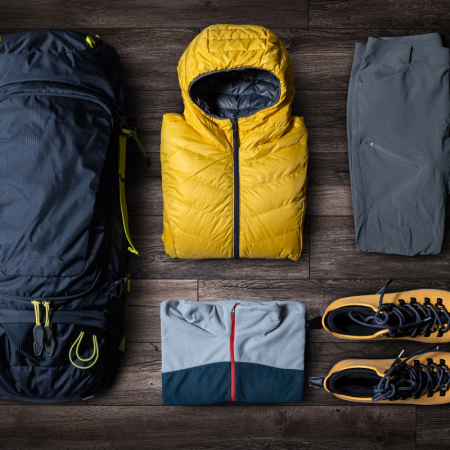
We recently helped you choose your hiking boots. But even if you’re just going on a day hike, the rest of your gear can make all the difference between a successful outing and an adventure that falls short.
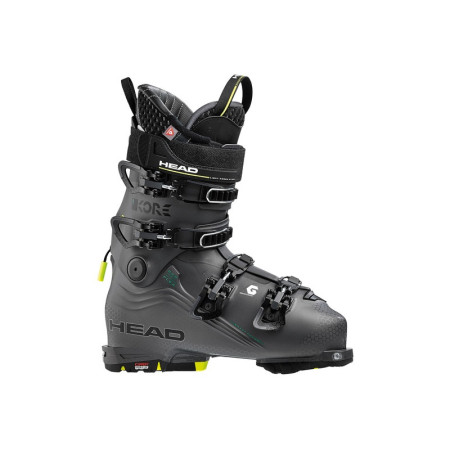
Head's new Kore 1 boots are ideal for experienced skiers looking for versatility on the mountain.
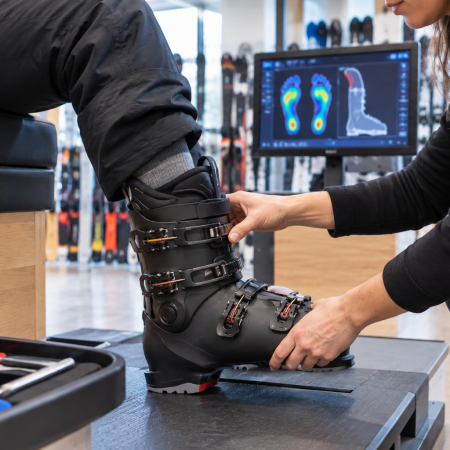
Visit Speck-Sports now and discover boot fitting for a precise fit and optimum comfort in your ski boots.