

How do you choose your hiking container?
After a long, hard day's hiking, we all want to eat when we get to the campsite, bivouac or refuge! When there's no restaurant where you're going to spend the night, it's essential to be equipped for cooking. The hiking container in which you'll be cooking is a very important accessory.
Different criteria for choosing a container:
- Firstly, depending on the number of people who will be taking part in the meal.
- Secondly, this container must also satisfy your desire for lightness during your hike. In fact, although cooking equipment can be used to eat in the evening, it shouldn't be too heavy to make the next day's hike unbearable.
There are a number of different sizes of cooking container for hiking:

Cups:
These are containers that simply allow you to drink a pre-heated beverage. These days, more and more of them are isothermal, so you can keep warm in winter and cool in summer! Very practical for sipping your coffee at lunchtime.

Cookers:
These can be used to cook simple meals or to heat water for one or two people. Their advantages are undoubtedly their weight and compactness. In fact, these trekking containers will make you forget you're there, allowing you to do a little cooking or drink a hot beverage. What's more, you can drink directly from these cups, which often have handles. But be careful not to burn your lips! They may or may not have a lid to speed up boiling time or keep the contents hotter for longer. Some models also fit neatly into certain water bottles, taking up less space during transport.

Kettles :
Kettles can be used to boil large quantities of water quickly. They are ideal for people who use freeze-dried foods and need to boil water quickly for one or more people. The boiled water can also be used to make teas, coffees and other herbal teas. It's also the ideal container for effectively melting snow in winter!
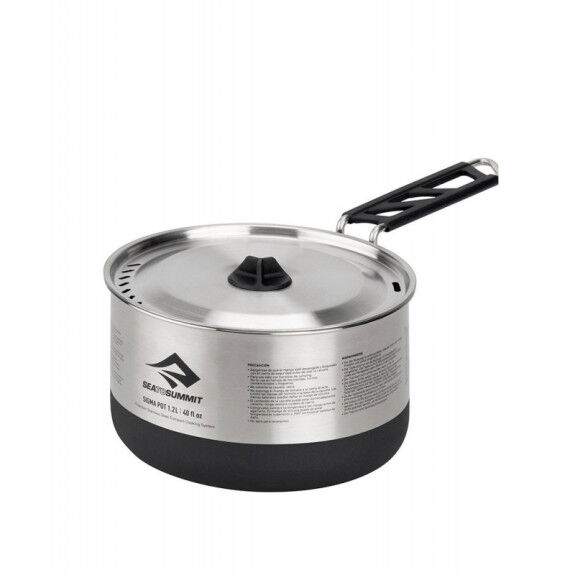
Saucepans:
The saucepans allow you to cook for 2 people or more. This means you can take just one large saucepan with you in the group, minimising the weight of the group. These large pans also have the advantage of being able to store small equipment when carried in the rucksack. So you can carry your stove, cutlery or even a bottle of gas inside the pan itself.
The different types of materials for your hiking container:
Once you've chosen the hiking container that's right for you, you'll need to choose the material it's made from! There are several solutions, each with its own advantages and disadvantages:
Titanium:
This alloy is almost 50% lighter than aluminum, yet much stronger and stainless. The disadvantage of titanium cooking vessels is that titanium is a poor thermal conductor. As such, it tends to create hot spots, potentially causing food to stick to the bottom of the container. On the other hand, it is the ideal candidate for boiling water quickly, while still having an ultra-light container. The titanium container can also be used for cooking, but you need to choose the ingredients carefully. Pasta, rice and purée should be preferred to grilling or baking foods that tend to stick. Another advantage of titanium is that, as a poor heat conductor, it is less likely to burn the lips than aluminum if you drink directly from the container!
Aluminum:
Aluminum is an ultra-light material, but has long been criticized as potentially hazardous to health in the kitchen. Nowadays, however, it's being used again! To counter its potential toxicity, aluminum containers are now anodized. This protects the food from direct contact with the aluminum, making them lighter and less expensive than titanium, for example. Beware, however, of the strength of aluminum, which will tend to warp if subjected to blows.
Stainless steel:
This is the material of choice for those who want a durable, sturdy container and aren't too concerned about weight. Indeed, although it has many advantages, stainless steel is rather heavy in general, so it may be best avoided by backpackers looking for a lightweight cooking solution.
Plastic:
Surprising as it may seem today, some manufacturers like Sea-to-Summit offer plastic hiking containers with a metal base. This allows you, for example, to cook and fold the container after use, making it very compact and practical to store in your bag. What's more, plastic is lightweight and heat-resistant! It's a very interesting compromise to more traditional cooking materials. Be careful, though, that the flame doesn't protrude beyond the metal plate, because although plastic is heat-resistant, it shouldn't be in direct contact with the flame!
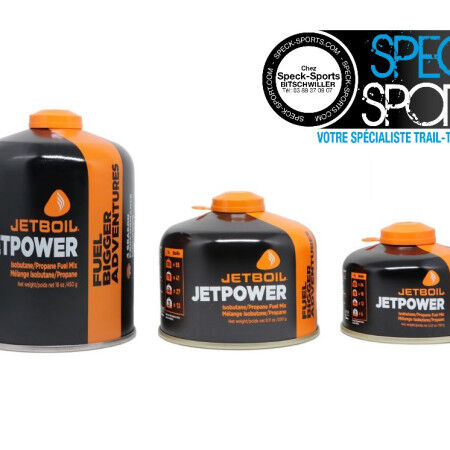
Planning to go camping? Find out how to adapt your gas cartridge to the environment where you'll be using your stove.

Discover the captivating story of Planks Clothing: a passion transformed into an innovative brand.
There are many models on the market, depending on the distance you plan to run. In this new guide, we'll look at the criteria for choosing one, the recommended capacity, the different hydration systems, and more…

Find out how to choose your cross-country skis, taking into account your body shape, your style of skiing and your ability.