
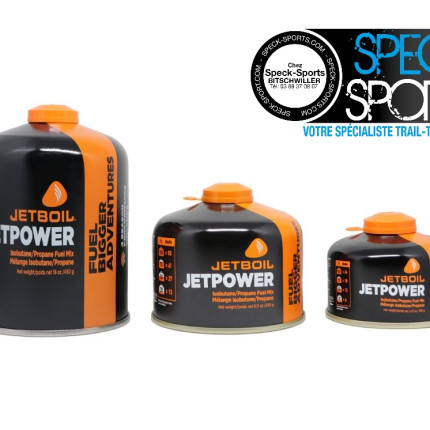
How do I choose a gas cartridge?
You think you've done the hard part by finding the perfect gas stove for your adventure? Suddenly you realise that you're missing something to make it work, namely the gas cartridge that goes with it. Once you've arrived at the shelves, you're faced with a multitude of choices: Jetpower, Power Gas, Isopro, Optimus, 100g, 230g or 450g. Think they're all the same? Well, these cartridges all have different uses, which is why the Speck-Sports team has decided to shed some light on the subject.
What type of gas cartridge?
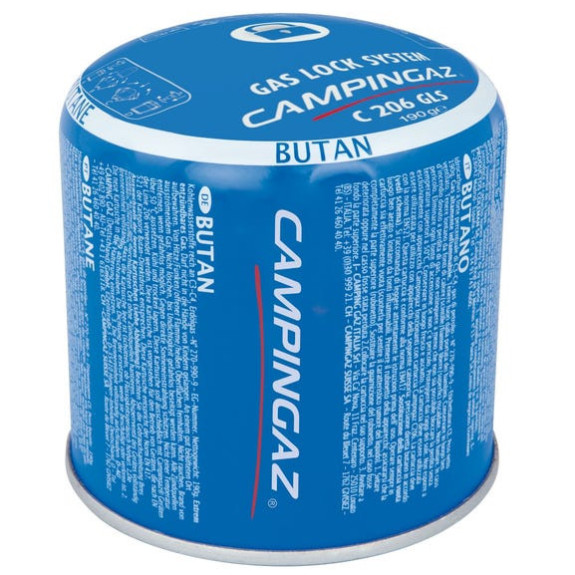
Drill-in
These gas cartridges are the least common because of their many disadvantages. They are not the safest or most practical. Once you've pierced the cartridge, you won't be able to remove the stove until it's completely finished.
That's why the Speck-Sports team recommends the following valve cartridges.
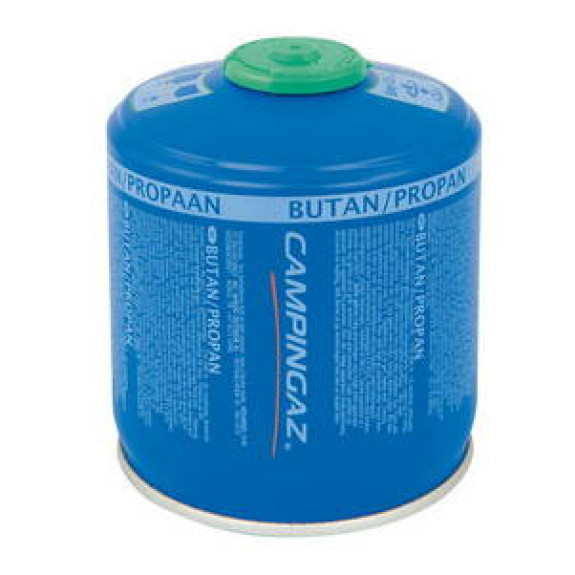
Non-threaded valve cartridge
This type of gas cartridge is known as clip-on, i.e. it does not have a thread. The best-known are Campingaz cartridges. They are very easy to find on the market. Unfortunately, their use is fairly limited, since they are only compatible with Campingaz stoves or a minority of Primus-type stoves.
Note that most Primus stoves compatible with this type of cartridge have the term"DUO" in their name. Examples include "Microntrail Stove Duo V2", "Essential Trail Stove Duo", "Easy Fuel Duo Piezzo" and "Powertrail Stove Piezo Reg Duo".
Unlike piercing gas cartridges, these can be removed without being emptied and reused the next time.
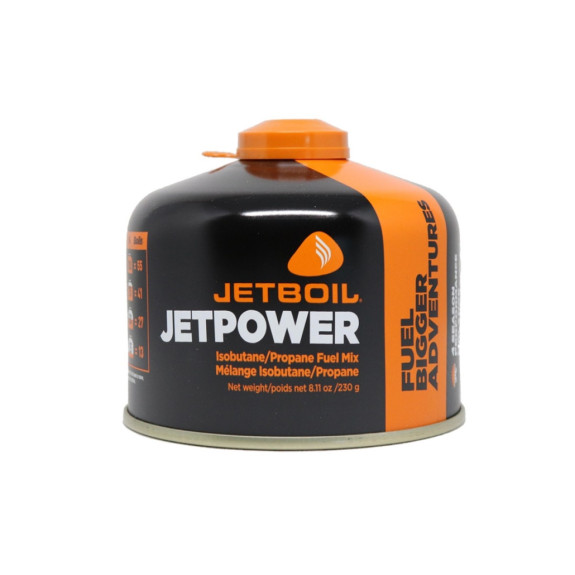
Threaded valve cartridge
These gas cartridges are the most common in the outdoor world. They have a screw thread that you simply screw directly onto the stove. They comply with the EN417 standard and are compatible with all MSR, Jetboil, Optimus and Primus gas stoves. However, they are not compatible with Campingaz stoves! You can use a Primus cartridge with an MSR stove, which poses absolutely no problem, although we recommend that you use a stove and a cartridge of the same brand for optimum performance.
Just like the previous cartridges, these cartridges can be removed even when they are not empty, so they can be reused as many times as possible.
Which gas cartridge composition should I choose?
Contrary to popular belief, not all gas cartridges have the same composition, even within the same brand. Before you buy a cartridge, think about the conditions in which you'll be using it, so you can make the right choice.
The three gases generally used are butane, propane and isobutane, all with different properties.
Butane
Butane is the inexpensive filling gas, but unfortunately does not stand up well to low temperatures. In fact, at low temperatures, it doesn't change well from a liquid to a gaseous state.
Propane
In addition to butane, manufacturers add propane. This gas has a very low boiling point (-42°C), which, when mixed with butane, lowers the operating temperature of your cartridge. So, the higher the proportion of propane, the lower the temperature at which your cartridge can be used.
Isobutane
The third element found in some gas cartridges is isobutane. This gas has a boiling point of -11.7°C, making it highly resistant to cold. But above all, it has the advantage of being a propellant gas with a high calorific value, enabling your cartridge to maintain a constant pressure down to -11.7°C.
In short, for a gas cartridge to be used in mild conditions such as summer or spring, it's best to opt for a cartridge made up of butane and propane, i.e. the SUMMER GAS cartridge by Optimus, made up of 80% butane and 20% propane, ideal between 15°C and 40°C.
On the other hand, if you're looking for a more versatile cartridge for 3-season use, it's best to opt for a cartridge with a higher proportion of propane, or one containing isobutane as well.
Choose from the following cartridges:
- Power Gas by Primus: 20% propane and 80% isobutane
- Isopro by MSR: 20% propane and 80% isobutane
- Energy by Optimus: 50% butane, 25% propane and 25% isobutane
- Jetpower by Jetboil: 2% butane, 25% propane and 73% isobutane
Three-season cartridges are designed for temperatures between -15°C and 25°C.
Some manufacturers go even further, such as Primus, which offers a cartridge specially adapted for winter use: Winter Gas. Composed of 5% butane, 25% propane and 60% isobutane, its special feature is a Vapour Mesh inside the cartridge that maximizes performance at temperatures between 10°C and -22°C. This Vapour Mesh, made from absorbent paper, increases the usable surface area during the evaporation process.
This type of cartridge delivers 9% extra power over 60 minutes of use, and 15% over 120 minutes.
What size gas cartridge should I choose?
The final factor to consider when choosing a gas cartridge is its capacity. This depends on a number of factors, including how long you'll be away, how many people you'll be with and the weather conditions.
There are three volumes: 450g, 230g and 100g of gas. The composition does not change from one volume to another for the same brand. Note that, on average, a 230g gas cartridge has an autonomy of 1h30. This figure should be put into perspective, as it depends on the outside temperature and the power used.
We hope you have found this article useful. We'd also like to remind you that an empty cartridge shouldn't be disposed of in the environment, but in a more appropriate place.
We hope to see you soon,
The Speck-Sports team.

Perfect for camping, hiking and outdoor activities, discover the new Camp Minima Pro tent from Speck-Sports!
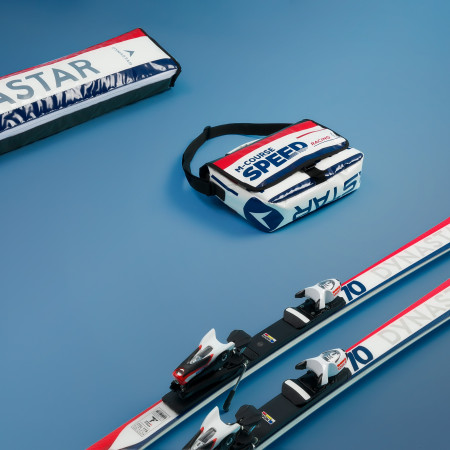
Dynastar M Course skis deliver performance, quality and innovation!

The tour of Cap de la Chèvre from Morgat begins by skirting the bay of Douarnenez. You'll pass the Fort du Kador dating from 1861.
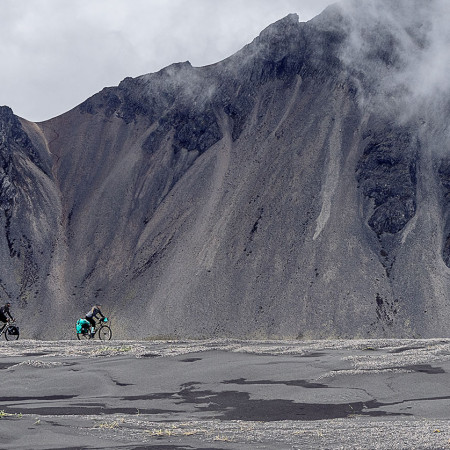
Bikepackers don't have to worry about the rules of the road, and travel light - all their equipment has to fit on the bike's tubes.