
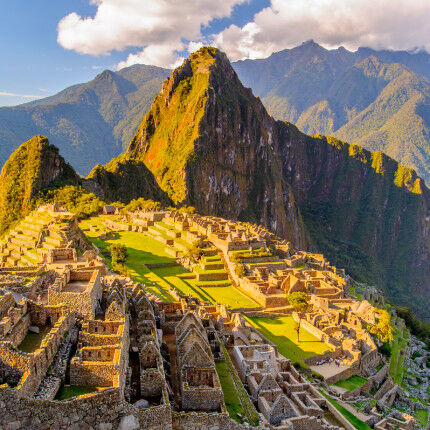
In the land of temples and mountains
Located on the South American continent, Peru is an exceptional land where magnificent mountains, timeless temples, marginal jungle, beautiful high plateaux and a very friendly population rub shoulders. This is a country of immense natural wealth. At the beginning of June, I went to the small town of Cuzco, which borders an immense stretch of Amazonian jungle. It's one of the gateways to an unimaginable playground that deserves to be visited, explored and explored for an unforgettable journey.
The city of Cuzco
Arriving by plane is impressive, as such a large plateau at an altitude of over 3400m can be surprising, both in terms of its temperature and the difficulty of moving around normally when you're coming from a much lower altitude... What struck me most at first sight was how densely packed all these dwellings are in this urban area. In the centre there are lots of shopping areas, then lots of apartment blocks and a few detached houses. The further you move away from the central plain, the more 'archaic' housing has taken over the surrounding slopes. So the higher up the hills that surround the town, the more "modest" the housing.
It's June, 5pm and my plane is landing. I catch a chill as I get out of the plane. It's 5pm in June and the natural light is fading fast. It's winter in this part of the world and the Coca country is quick to point this out to me. By 6pm it will be full dark when my taxi takes me to my hotel.
I've just had time to change my euros into Sol. 1 euro = 3.80 Sol (more or less 4 Sol if you want to make a quick comparison).
For my European eyes, the city is a subtle blend of tradition, discovery, surprises and sadness. There's no point in going into detail here about the problems of waste treatment and the sensitivity of the inhabitants to theenvironment and global warming. After all, we are in a developing country. Here people need above all to eat and live decently before thinking about these "rich country" problems.

When I arrived at my hotel, I was pleasantly surprised by the welcome, the smile and the friendliness. I don't speak a word of Spanish, but the young Peruvian woman in front of me tries to use all the equipment at her disposal so that we understand each other (Google translate, deepl, ES-FR dictionary) and it ends up paying off.
Cuzco, capital of abundance
When I first wake up in this city, I set off to explore the area in the early hours of the morning. The sun hadn't yet risen. With hiking boots on my feet and a rucksack equipped with my camera, I set off to photograph this new environment that I'd been thinking about for months and that so many people dream about.
I don't linger in the town centre, I take all the streets that lead up to the peaks on the outskirts. I played the game of running with some schoolchildren and they had no trouble overtaking me and laughing as they passed me. We're at an altitude of 4,000m and my body isn't acclimatised.
Once we reached the first summit, it was impossible to get the angle I wanted to take photos of the city. Peruvians are very stingy. All viewpoints offering an optimum view of the city have to be paid for. So I'm going to redouble my efforts and use my trailing skills to find a spot much further away and capture an image of this fascinating and mysterious city.


Machu Pichu
A lot of people asked me if I had "gone on an adventure" to these places. First of all, it was very difficult to find a "sincere and optimal" way to get there. Indeed, one of the most obscure aspects of this country is its poverty, which has an impact on the tourist industry, making it an oppressive place to visit. It's impossible to visit the city of Cuzco without being constantly hounded by vendors offering "tours" to Machu Pichu, Rainbow Mountain or a "massage". These "solicitors" roam the streets of the old town, with their sights set on any tourist who might be of interest to them. There are hundreds of agencies offering tours to Machu Pichu. And, of course, they all offer an attractive price, better than the one across the road from them.
So you have to be careful, even if there are some very good travel agencies. For my part, I refused all the offers that came my way in the first few days, and after having eaten with some friends who had come for the race I'd taken part in and who knew Peru well, I let them guide me to a safe address, which, incidentally, didn't have any touts.
The train, then the bus, and once I was at the foot of the bus, I regretted the crowds and the mass of people. I admired the landscape before me, but didn't take part in the long ascent on foot, drawing a column of human beings less than 50cm apart. Unfortunately, it was a very crowded day: lots of tourists in groups, lots of noise, the very opposite of what I'd imagined Machu Pichu to be.
The next day I set off for another, much smaller archaeological site. I'd found it on a map and, after being dropped off by a cab on the outskirts of town, I set off on a 23km hike to find the site. There was no one around and the scenery was magnificent. It's important to get off the beaten track and take an interest in the places that other travellers don't want to see. If you have a good pair of shoes and a good backpack, the trip is much more pleasant than by train or bus.
2 June: Start of the Jungle Ultra (230km)
My visit to this country is linked to my participation in the Jungle Ultra. A 230km race over 5 stages in the middle of the Amazon jungle. A race described as"the most dangerous ultra in the world" because of the surrounding flora and fauna.
In the early hours of 2 June, my future competitors and I set off in vans. On the programme? An 8-hour journey to a scientific research centrein the heart of the El Manu national park in the middle of the Amazon jungle. Our first base camp will be at an altitude of 3,000m in the heart of a dense, humid jungle full of insects and reptiles of all kinds...
Each night we sleep in hammocks that we hang on poles fixed beforehand by the race organisation staff. Nobody is allowed to sleep on the ground, it's far too dangerous. As soon as I woke up, I found a little snake wrapped around my hammock tightening ropes. The colour is set, this week is going to be difficult and living with all these animals will be a real human and sporting experience.
The week will take place in 5 stages and we'll be self-sufficient in food. This means that we carry everything we eat. All the riders have freeze-dried meals and cereal bars. Rationing is always very difficult, but with the effort of sport, appetite doesn't always come. At the start of this race, I had 2.3kg of food, including one freeze-dried meal a day, vacuum-packed dried fruit, vacuum-packed cashew nuts, high-protein bars, a sausage (from the Pyrenees), several sachets of powder to put in the water and a few sweets. It's important to indulge yourself in this kind of event, as your mind and spirit are often in shambles!
How the Jungle Ultra works
This is a very special race. There are only 50 runners. All of them already have a good record of success in multi-stage events (the name given to these stage races in English). I'm the youngest in the group and many people think I'm a novice in the world of ultra trail running. It's a good advantage that I'll use later on.
The stages are as follows:
1: 37km
stage 2: 37km
stage 3: 42km
stage 4: 39km
stage 5: 75km
I won't go into detail here about the race stage by stage, but I will give an overall summary with a few anecdotes about this type of adventure and the equipment I missed or appreciated.
One thing is certain. Don't even think of setting off into the jungle if you don't have a backpack worthy of the name. For this race I had a Raidlight Olmo 20L that was filled on all sides and on the outside too (via waterproof bags). If I had to do it again, I'd opt for a 30L rucksack, perhaps one that's more Trek than Trail oriented. An Osprey or a Deuter would do the job perfectly, and their sturdiness is well proven.
I had Leki Micro Stick Carbon poles. It's a mistake to have carbon poles in this jungle. I actually broke one crossing a river. Carbon is an invaluable tool when you want to be quick and fast, but in this kind of adventure it's better to opt for aluminium poles like the Black Diamond range.
When it comes to footwear, it's best to opt for a half-hike/half-trail! The Salomon XA PRO 3D is the ideal candidate for this type of race. Above all, it's solid enough to easily tread the ground in this jungle.
The rest of the equipment is rather personal, but the Sea to Summit waterproof bags were extremely useful and proved to be waterproof after crossing several rivers with water up to the neck.
A race like no other
The Jungle Ultra was special in the sense that the environment we were running in was hostile to humans. Insects, animals and plants are health risks for our bodies and we have to be very careful. I was lucky enough to experience insect bites in the Amazon wilderness. Mosquitoes fly in squadrons and attack you throughout the day and night (that's why it's essential to have a hammock with a mosquito net, otherwise you won't be able to sleep), there are many ants on the trees that cause violent bites, not to mention the spiders that are legion in this environment.
Every day at 8.00 am the start of the stage is given and every day I place (to my great surprise) rather well. In fact, I finished this Jungle Ultra in 2nd place, crowning the success of a week full of sharing, emotions and sporting anecdotes.
During the race, we crossed around fifty rivers, passed twenty villages and met many animals. I've included a slideshow of photos from this unimaginable week below.
A world-renowned outdoor brand, Speck-Sports offers a wide range of products.
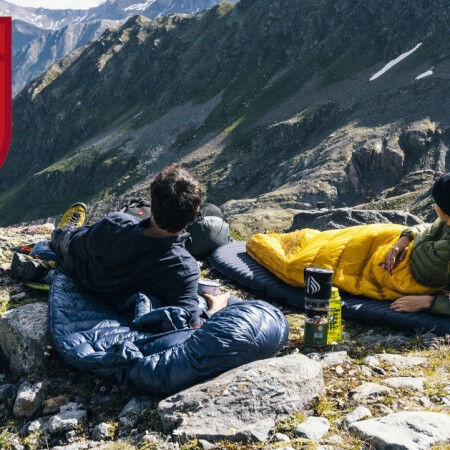
Discover Pajak sleeping bags: light, warm and ultra-comfortable, perfect for hiking and camping in the great outdoors.
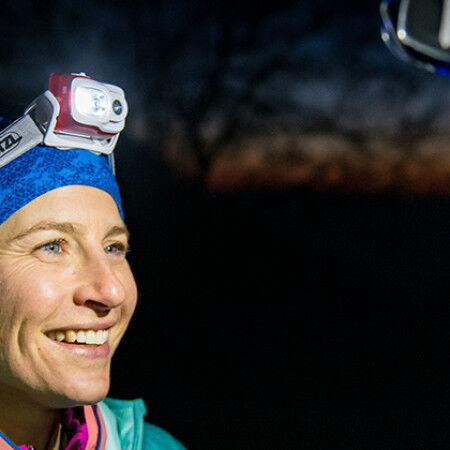
Having trouble finding your way around the Petzl headlamp range? This article will help you find your way around!
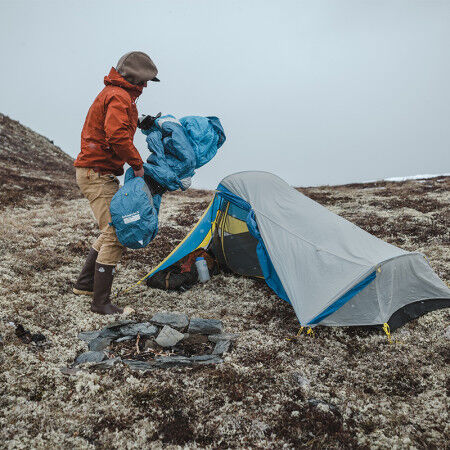
Discover the American brand Sierra Designs, which offers a wide range of sleeping bags, available at Speck-Sports!