
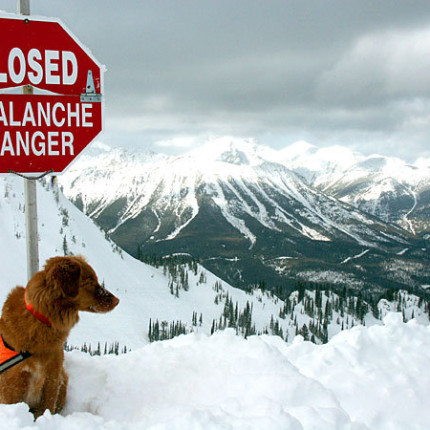
Off-piste safety equipment
Off-piste safety equipment plays a major role in the survival of avalanche victims. It's important to be properly equipped before setting off down the mountains.
Let's start with a few safety figures
According to ANENA statistics, during the 2018-2019 season there were 68 avalanches that took people's lives, but 13 fatalities.
While 80% of alpine hikers are now equipped with avalanche transceivers, only 45% of off-piste skiers and snowboarders are.
With the telephone network covering the majority of ski areas, people feel safer about calling for help. But statistics show that the chances of survival diminish rapidly over time. The only way to guarantee a very high percentage of survival is for the rescue services to be organised directly by the people who are on the spot and equipped to do so.
It all comes down to the first 15 minutes:
- Between 0 and 15 minutes of burial: The chances of survival are 91%. Most victims are fatally injured when they fall into the avalanche.
- Between 15 and 45 minutes of burial: Chances of survival drop to 25%. This is the asphyxiation phase. Without an air pocket and with a compressed thorax, victims die of asphyxiation.
- After 45 minutes of burial: The chances of survival decrease progressively depending on the presence or absence of air. After 2 hours, the chances of survival are only 7%.
The importance of safety equipment :
For a rapid rescue, you must
- Locate the victim using the avalanche transceiver and a probe. In addition to dogs, professional rescuers have specific tools such as the RECCO system, which is fitted to some equipment and clothing.
- Getting to the victim.
It can take more than an hour to dig through 1 m of avalanche snow with just your skis and hands. Hence the importance of carrying a shovel.
The DVA
What is a DVA or ARVA?
The Avalanche Victim Detection Device is an electromagnetic transmitter-receiver operating on the standardised frequency of 457kHz. An avalanche transceiver has two functions: transmitting and receiving.
When you go off-piste, you need to have your avalanche transceiver on at all times (after checking that it is working properly). In the event of an avalanche, witnesses will switch their avalanche transceivers to receive mode to locate victims.
When choosing your avalanche transceiver, take into account
- Signal range and bandwidth. The greater the range, the sooner the victim can be located.
- Digital and analogue modes
Until 1998, manufacturers used analogue technology. In this case, the signal from the transmitting avalanche transceiver is converted by the receiver into sound waves. When a receiving avalanche transceiver picks up a transmitting avalanche transceiver, it emits a "beep", which is louder the closer the two devices are to each other or if they are correctly aligned. A potentiometer is then used to vary the sound intensity of the signal, by adjusting the sensitivity of the receiver. All avalanche transceivers manufactured before 1998 were analogue.
In 1998, a second generation of avalanche transceivers appeared, using digital technology either exclusively or in conjunction with analogue technology. These are known as digital avalanche transceivers.
The signal from the transmitter is analysed by a microprocessor which converts it into two types of visual indication:
- An indication of progress (numerical value appearing on a screen)
- An indication of direction (a diode or arrow that lights up when the receiver is correctly oriented in relation to the transmitter)
Finally, the Arva has 1 to 3 antennae. Recent models all have 3 antennae, which will simplify the search for victims by giving indications of distance and direction. They are also much more precise in the final search.
Avalanche transceivers also protect rescuers by automatically switching to transmit mode when there is no movement for a certain period of time (in the event of an avalanche)
Simple rules for using avalanche transceivers:
- To be effective with an avalanche transceiver, you need to know how to use it in search mode. You shouldn't wait for an accident to happen before you learn, because stress and confusion make searching a reflex. Practise searching with an avalanche transceiver before an accident.
- Don't wear your avalanche transceiver just under your jacket: as soon as the weather warms up, when you take off your jacket the transceiver appears in the open: in the event of an avalanche it could be ripped off!
- Remember to take a snow shovel and a probe with you: you've just found someone buried in less than 5 minutes, but you need 45 minutes to free them by hand... enough time to die of asphyxiation under the snow.
- Check that batteries are in good working order
- Check that all your equipment is in good working order and switched on at the start of each outing. This will prevent any equipment from breaking down or any foolish enthusiasts who haven't plugged it in.
A transceiver should be used in conjunction with a probe and shovel
The average search time for a victim is estimated at :
- 11 minutes with an avalanche transceiver, probe and shovel
- 25 minutes with an avalanche transceiver and a shovel
- 1 hour with an avalanche transceiver alone.
When you know that everything is decided in the first 15 minutes, it's imperative to go into the mountains with these 3 safety elements.
Probes
Probes are collapsible poles used to locate avalanche victims beneath the snow. They are made of aluminum for strength, or carbon to save weight.
They must be at least 2 m long. The standard length is 2.4 m, with rescuers using probes from 2.80 to 3.2 m for greater probing capacity.

Shovels
Shovels (handle + bucket) can be made from combinations of the following three components: Carbon, aluminium and polycarbonate. Carbon and polycarbonate will be lighter, but aluminium will be more effective on hard snow.
Telescopic handles help to make the shovel more compact for storage but also more efficient once deployed for shovelling.
Some models also have a pick position for more efficient clearing.
Airbags
The airbag is an important additional safety feature. Contrary to popular belief, it does not totally eliminate the risk of death, but halves it.
22 out of every 100 avalanche victims die. Except that this number is reduced to 11 with a successfully triggered airbag.
However, according to ANENA, it is still very important to familiarise yourself with how the release works. Unfortunately, 20% of inflations fail, and 60% of these are the fault of the user.
Furthermore, the personal safety benefits of airbags are quickly negated if users use them to justify increased exposure in terrain where larger avalanches are possible.

Speck-Sports introduces you to Hydro Flask water bottles!
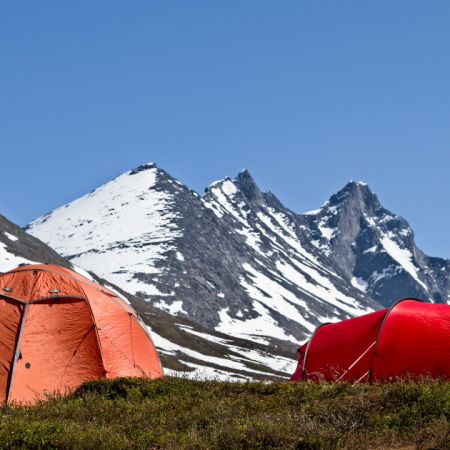
A successful overnight camp after a hike starts with proper planning and the right gear—neither too much nor too little. What do you really need to bring?
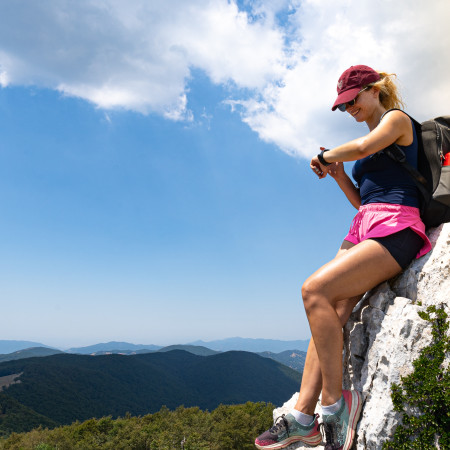
How do you choose the best connected sports watch for your sport? Discover our smartwatch tips and suggestions.
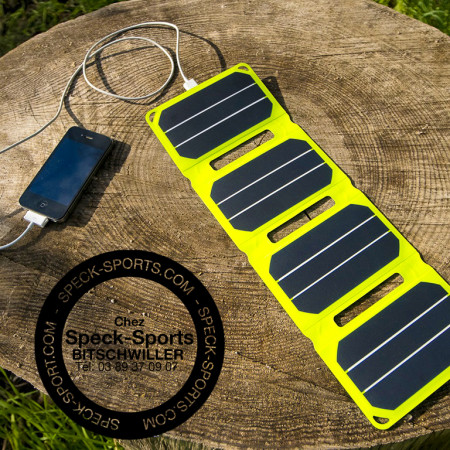
Lightweight and easy to attach, discover the new solution that lets you carry not energy, but a way of creating it.