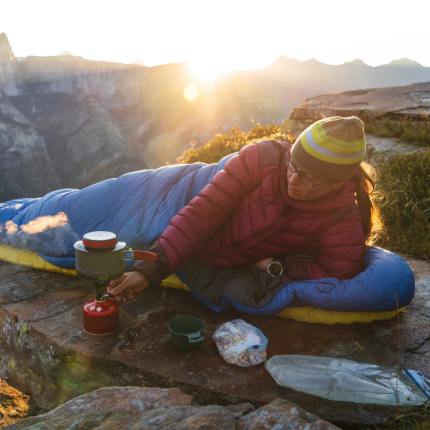

Choosing a Camping Stove
A gas stove is the simplest and most common choice for camping. Lightweight and easy to use, it’s ideal for trips below 2,000 meters. Its main drawback: gas cartridges lose efficiency in cold weather—below 0°C for pure butane…
The multi-fuel stove runs on various liquid fuels—gasoline, kerosene, and diesel—making it independent of gas canisters. It’s perfect for high-altitude expeditions or winter conditions. Heavier and more complex to use than a gas stove, it’s designed for experienced backcountry campers heading out into challenging conditions.
The alcohol stove is the lightest and technically simplest option; it’s often handmade, and sometimes even crafted at home from a simple tin can. Very popular in the ultralight community, it’s suitable for camping in calm, mild weather but proves ineffective in windy or extremely cold conditions.
For a typical bivouac in Alsace or the Vosges, below 1,500 meters and across three seasons, the gas stove remains the best choice nine times out of ten. Save the multi-fuel stove for high-mountain expeditions or in full-blown winter conditions.
Light Cooking: Simple, Fast, and Effective
Freeze-dried meals, or dehydrated meals, are the best choice for camping meals. They weigh very little—between 100 and 150 grams per meal—can be rehydrated right in their pouches with boiling water, and provide the right amount of calories and nutrients for mountain activities. In ten minutes, you’ll have a hot meal with no dishes to wash—just the pouch to toss into your hiking trash bag.
As for utensils, a lightweight titanium or anodized aluminum mess kit, a long spoon, and a multifunctional lid are more than enough. Avoid stainless steel cookware, which is heavier than necessary for backcountry use. Airtight pouches help you organize and protect your food from moisture—a real plus when morning dew finds its way into your pack. For snacks—energy bars, dried fruit, nuts, and chocolate—prepare them in advance in daily portions inside individual bags. It’s more convenient, and it saves you from rummaging through your pack at every break.
Water Filtration and Purification
When camping, you rely on natural sources for your water supply. Even in the high mountains, water that looks crystal clear may contain bacteria, viruses, or protozoa such as Giardia, a particularly stubborn intestinal parasite. A water purification system isn’t a luxury—it’s essential safety gear.
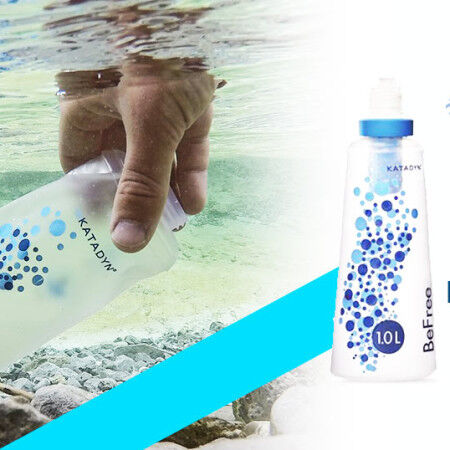
A portable water filter—whether in the form of a filter stick or a filter built into a water bottle—is the most practical tool for backcountry camping in the mountains. It removes bacteria and protozoa through mechanical filtration. Most of these filters can treat several hundred liters of water before needing to be replaced, and weigh only 50 to 100 grams. They’re lightweight, fast, and require no chemical contact time.
Chlorine- or chlorine dioxide-based purification tablets are the lightest and least expensive alternative. They eliminate bacteria and viruses but require a contact time of 30 minutes to one hour before the treated water is safe to drink. Some tablets leave a slight chemical taste, which can be reduced by neutralizing tablets that some manufacturers offer as a supplement.
Boiling water remains the safest and most universal method for eliminating all pathogens, including viruses, which portable filters do not always remove. The downside is the additional gas consumption this entails, a factor to consider when choosing and sizing your stove. For camping trips in France and Western Europe, a portable filter is generally sufficient. For more challenging destinations, combine a filter with water purification tablets.
Choose the Right Size Kit Based on the Length of Your Camping Trip
The amount of cooking and water gear you need depends directly on the number of nights you plan to spend camping. For one night, a small 100-gram gas cartridge is more than enough for a hot meal, morning coffee or tea, and possibly some boiled water in addition to the filter. For trips longer than two nights, bring a larger canister or a spare one, and consider the filtration capacity of your water filter if you’re heading out for a week.
As for hydration, allow for 2 to 3 liters of water per day in the mountains, depending on your activity level and the temperature, and locate water sources along your route in advance rather than carrying everything with you from the start. A soft-sided water bottle or hydration bladder is easy to refill along the way if you’ve identified reliable water sources.
Once your cooking and water systems are sorted out, you’ll need to think about what will help you recover well at night: choosing the right sleeping gear—tent, sleeping bag, and insulated mat—remains the top priority for a successful camping trip. We’ll guide you through this in our article on the essential gear for a stress-free camping trip.
Conclusion
There you have it—you now have everything you need to eat well and stay properly hydrated on your next camping trip. A stove suited to your needs, properly portioned freeze-dried meals, and a reliable water filtration system guarantee peace of mind in this regard—and help you conserve energy so you can enjoy the outdoors rather than just endure it.
Need advice on choosing a stove or water filter for your specific adventure? Stop by our store in Mulhouse—our team knows every product inside and out and will take the time to help you find the right gear for your needs.