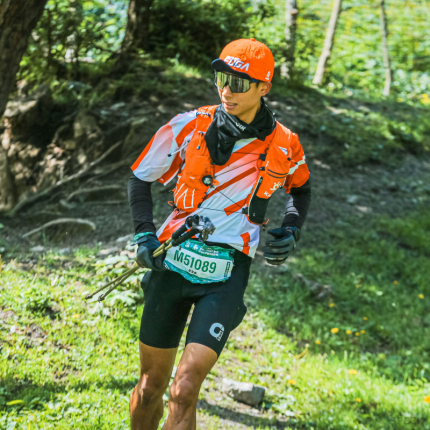

Whether you're preparing for your first trail run or an ultra-trail, this comprehensive guide will answer all your questions:
- What mandatory gear do you need for a trail race?
- How do you choose your shoes, clothing, and accessories?
- What gear is best for different weather conditions and skill levels?
- How do you create a gear checklist before the race?
What Organizers Require for a Trail Race
Why Is There a Mandatory Gear List?
In official trail races—and even more so in ultra-trails—organizers require a mandatory gear list. This isn’t just an administrative formality; it’s a matter of trail safety. Mountain trails expose runners to unpredictable weather conditions, sub-freezing temperatures, and the risk of falls or injuries far from any help. Each item on this list can, in certain situations, save your life.
Equipment checks are usually conducted at the start, and sometimes along the route. Missing equipment can result in disqualification. Here are the essentials found on nearly all official lists.
The List of Essential Gear
- A waterproof jacket is the item most consistently required. At high altitudes, the weather can change in a matter of minutes: strong winds, freezing rain, or thick fog. A jacket with a waterproof and breathable membrane—such as Gore-Tex, H2No, or an equivalent—is essential. Key criterion: a waterproof rating of at least 10,000 mm to handle real-world mountain conditions, combined with good breathability to prevent overheating during exertion.
- A survival blanket weighs just a few grams and is about the size of a deck of cards. It can help maintain your body temperature in the event of a forced stop, injury, or hypothermia. Essential—always keep one in your pack.
- A headlamp with spare batteries is mandatory on the vast majority of runs that start at night or include long stretches through shaded areas. Even on a daytime trail run, carrying a headlamp in your pack is a safety precaution you should adopt whenever your runs last longer than 4–5 hours.
- A whistle allows you to signal your location in an emergency, even without cell service. Lightweight, compact, and essential.
- A fully charged phone with the emergency number and, if possible, the race tracking app is required by most organizers.
? Each race has its own list of mandatory gear. Always check the rules for your event before the start; some ultra-trails also require a minimum food supply, a water filtration system, or a lightweight sleeping pad for self-supported races.
Trail running shoes: the foundation…
How to Choose the Right Shoes for Your Run
Your trail running shoes are your first point of contact with the terrain. In trail running, they must meet very different requirements than those of a standard running shoe: traction, stability, appropriate cushioning, protection, and lightness. Don’t even think about using your running shoes on technical trails—the risk of slipping and getting injured is very real.
The number one factor is the sole. Trail models are equipped with lugs, the height and spacing of which vary depending on the terrain:
- Short, closely spaced lugs (3–4 mm): dry, compact terrain, forest trails, rocky trails. Ideal for regular use on mixed surfaces.
- Tall, widely spaced lugs (5–6 mm and up): mud, loose terrain, snow. Maximum traction on slippery terrain.
- Vibram sole: the gold standard for traction and durability on rock and varied terrain. It’s the premium standard found in leading brands.
The second criterion is the drop—the difference in height between the heel and the forefoot. A high drop (8–12 mm) is best for runners with a heel-strike gait. A low drop (0–4 mm) is suitable for forefoot runners and technical trails where proprioception is key. For beginners, a mid-drop (4–8 mm) with adequate cushioning offers a good balance of comfort and neutral stability.
The shoe’s weight also matters, especially over long distances: between 250 and 350 g for a good performance trail running shoe, and slightly more for reinforced models designed for mountaineering or winter trail running.
Trail Running Backpacks: Choosing the Right Model
Hydration Pack or Trail Running Backpack?
On the trail, the question doesn’t really come up anymore: the trail backpack with a built-in hydration system has become the standard. It’s a much better option than a simple water bottle belt as soon as your run exceeds 1 hour and 30 minutes or when elevation gain comes into play.
Two systems coexist:
- The hydration pack with a water bladder: bottle size of 1.5 to 3 liters, ideal for long distances and ultra-trails where hydration over long distances is critical. The water bladder is carried on the back, connected to an easily accessible tube.
- The trail vest with front pockets for flasks: the system favored by competitors for its balance of weight and accessibility. The flasks (flexible bottles ranging from 150 to 500 ml) fit into the chest pockets, accessible without removing the vest or stopping.
What size should you choose for the race?
The pack’s capacity depends directly on the duration and type of race:
- 3 to 6 liters: short trail runs, light day hikes, no extensive mandatory gear list
- 8 to 12 liters: trail runs with a mandatory gear list, outings lasting 4 to 8 hours
- 15 to 20 liters: ultra-trail, full self-sufficiency, extensive gear requirements, and in-race nutrition
Technical running gear for all conditions
The 3-Layer System in Trail Running
In trail running, managing both cold and heat is key, especially in an environment where temperatures vary significantly between the start and finish of the course. The 3-Layer System applies just as fully as it does in all mountain activities:
- The first layer (base layer): a technical T-shirt that wicks away sweat. Synthetic fabric (polyester) or merino wool to regulate body temperature and keep you dry during exertion. Avoid cotton at all costs, as it retains moisture and promotes chills.
- A mid layer: a lightweight fleece or compressible down vest that retains heat during breaks or at high altitudes. It packs easily into your trail running pack.
- The outer layer: a waterproof and windproof jacket that protects against the elements. Lightweight, packable, and waterproof—breathability is essential to prevent overheating during exercise.
Trail Shorts and Pants
Trail shorts are the essential gear for summer conditions. They usually feature built-in shorts or briefs to prevent chafing, side pockets for gels and energy bars, and a loose fit for maximum range of motion.
In cold weather, trail tights or technical pants take over. Some models feature windproof panels on the front and breathable fabrics on the back, perfect for training in cold weather or high-altitude runs in the spring and fall.
⚠️ Avoid cotton clothing, even for short runs. In wet weather or at high altitudes, a wet cotton T-shirt can cause rapid hypothermia. Invest in breathable technical fabrics from the start.
Protecting Yourself from the Elements
In addition to the mandatory waterproof jacket for races, a few clothing accessories round out your protection:
- Technical socks: anti-chafing, with light compression to aid recovery and reduce muscle fatigue during long-distance runs. Compression socks are especially recommended for ultra-trails.
- Arm sleeves: Lightweight and packable, they allow for precise temperature regulation; you can easily remove them on uphills and put them back on during downhills or in the shade.
- Lightweight gloves: essential for high-altitude runs or in cold weather. Some models are touchscreen-compatible (handy for your GPS watch or phone).
Trail Running Gear: Useful, Recommended, or Essential?
The GPS Watch
The sports watch has become an essential accessory for trail runners who want to track their training, manage their pace over long distances, and navigate independently. It records elevation gain, distance, and heart rate, and, depending on the model, provides trail maps.
To get started, an entry-level model is more than enough. For ultra-trails, opt for a watch with extended battery life (30 hours or more) that’s compatible with IGN or OpenStreetMap map formats.
Trail Running Poles
Trail running poles aren’t mandatory, but they quickly become indispensable once the elevation gain exceeds 500 m or the distance exceeds 25–30 km. They help distribute the effort between your upper body and legs, reduce muscle fatigue on ascents, and provide two additional points of support on descents over rough terrain.
Single-section foldable poles or multi-section telescoping poles? Carbon or aluminum? Cork or foam grips? We explain everything in our comprehensive guide to trail running poles—check it out to make the best choice based on your needs.
The Headlamp
Even on a daytime trail run, a headlamp deserves a spot in your pack as soon as your run exceeds 4–5 hours. Key criteria: lumens (at least 300 for serious trail running), battery life, weight, and water resistance. Some models offer a combined spot/flood beam, which is very handy for switching between technical sections and long straights.
Nutrition During the Race
On long-distance runs, nutrition is just as important as your gear. Energy gels, bars, dried fruit, fruit compotes… the idea is to eat regularly and before you feel hungry, every 30 to 45 minutes depending on the intensity. Your trail running pack should have enough easily accessible pockets to store your snacks without having to stop.
? A trail runner consumes an average of 400 to 600 kcal per hour, depending on intensity and elevation gain. On a 10-hour ultra-trail, that amounts to between 4,000 and 6,000 kcal to replenish, partly through the food you carry and partly through official aid stations.
It’s better to bring too much than not enough…
Shoes with traction suited to the terrain, a waterproof jacket, a backpack with a hydration system, a headlamp, and a survival blanket: each item has its role, and every choice deserves careful consideration.
Remember the essentials: always check the mandatory gear list for your race, prioritize investing in your trail running shoes and trail running backpack, then gradually build out your gear based on your running style and goals.
At Speck Sports, we outfit trail runners every day, so feel free to ask us any questions or stop by the store to test out gear for your next race!