

How does an electric cooler work?
An electric cooler is much more than just an insulated box. Unlike a traditional cooler, which simply slows down the rise in temperature thanks to its insulated walls (and the ice or cold water placed inside), an electric cooler actively produces cold as long as it’s plugged into a power source. The result: your food and drinks stay cool for as long as you want, without needing ice or cooling packs.
The basic principle is always the same: a cooling system transfers heat from the inside of the cooler to the outside. It is this heat transfer that maintains a low temperature inside. However, depending on the technology used, the way this transfer occurs, its performance, energy consumption, and noise level vary considerably.
That’s why it’s important to understand these three systems before choosing your cooler. Cooling capacity, power consumption in volts and amps, compatibility with your vehicle or campsite, and noise levels at night—it all depends on the technology used. We’ll explain each system in detail below.
The 3 Types of Electric Coolers
First, you need to ask yourself how you’ll be using it. Will it be for camping in a trailer, a road trip by car, an outdoor picnic, or a trip in a camper van? Depending on your activities and hobbies, the cooling system makes all the difference. There are three technologies: absorption, thermoelectric, and compression. We’ll explain everything.
The absorption cooler: quiet and versatile
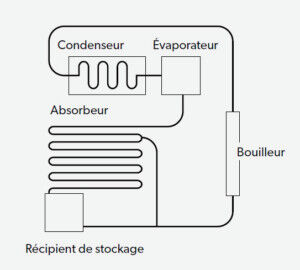
The absorption cooler is the quietest of them all. No motor, no fan: zero noise. It works through a chemical cycle in which heat (not cold) triggers cooling via the evaporation of an ammonia solution. Surprising, isn’t it? The result: an interior temperature that can drop up to 30°C below the ambient temperature, making it an effective option for keeping your food fresh.
Its other major advantage? Multi-source compatibility. A 12V cigarette lighter socket in the car, a 230V wall outlet at home or at a campsite, or even gas when there’s no electrical power available. It’s the only portable electric cooler that can operate without electricity—a real plus for backcountry camping or areas without access to the power grid. As for the power cord, it’s usually included.
Average capacity: 30 to 40 liters. Power source: 12V / 230V / Gas.
Our recommendation: ideal for RV trips, vacation travels, and nights when you sleep in the same room as your cooler.
The thermoelectric cooler: lightweight, compact, and convenient
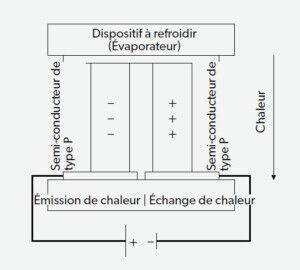
Based on the Peltier effect (a physical principle discovered in 1834), the thermoelectric cooler uses an electric current to move heat away and cool the interior. When an electric current passes through two different conductive materials, it creates a cold side and a hot side; the voltage difference produces the cooling effect. Lightweight, compact, and easy to carry: it’s the ultimate portable model for a day trip, a picnic, or occasional use.
Be aware, however, that its cooling efficiency is directly linked to the ambient temperature. It cools to an average of 20 to 27°C below the outside temperature, but becomes less effective above 25–30°C. Its fan produces continuous noise, which is something to consider if you plan to use it at night. Its capacity is generally limited, and its single compartment doesn’t always allow bottles to be stored upright, depending on the type of cooler.
Average capacity: 5 to 35 liters. Power supply: 12V / 24V / 230V.
Our recommendation: perfect for short getaways, picnics, and trips lasting a few hours. Not suitable for extreme heat or extended outings.
The compression cooler: the most efficient, no question about it
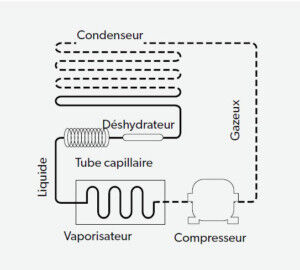
The electric compression cooler is a powerhouse of performance! Its system works just like your home refrigerator: a compressor compresses the refrigerant, turns it into a gas, and then evaporates it to absorb and dissipate heat. The result? An interior temperature that can be precisely adjusted via a thermostat and maintained regardless of the outside heat. Some models can even reach temperatures close to freezing, making them ideal for storing frozen foods or medications.
It is compatible with a 12V, 24V, or AC (100–240V) outlet, and some models operate directly with a portable solar panel or a portable power station.
Average capacity: 10 to 90 liters. Power supply: 12V / 24V / 100-240V.
Our recommendation: the ideal choice for camper vans and converted vans, road trips in warm climates, families, and extended stays.
A Few Criteria for Choosing an Electric Cooler
Criterion #1: Expected ambient temperature
This is the number one factor. The golden rule to remember: below 25–30°C, absorption or thermoelectric models are sufficient. Above that, only compression technology maintains optimal energy efficiency and keeps the selected temperature over time, regardless of the outside heat.
Let’s look at a concrete example: at 40°C outside, an absorption cooler cools the interior to about 10°C (30°C below the ambient temperature). A thermoelectric cooler will reach 10 to 20°C, depending on the model. A compression-based cooler, on the other hand, maintains the temperature you’ve selected—period. In low-power mode, some compression models remain particularly efficient.
Criterion #2: Available Power Source
Before making a purchase, check the available power outlets in your vehicle or at your destination:
- 12V cigarette lighter socket: car, van, minivan, RV
- 230V wall outlet: home, campground with electricity, mobile home
- Gas: wild camping, bivouac, caravan without electricity
- Solar panel or portable power station: for complete self-sufficiency outdoors, with fast charging depending on the portable solar generator used
The absorption cooler is the most versatile in this regard. Compression and thermoelectric coolers require a continuous power supply. A quick tip: always check your model’s power consumption to avoid draining your vehicle’s battery. Some rechargeable battery-powered coolers include a charge management module to prevent this issue.
Criterion #3: Capacity in Liters
The right size depends on the number of people (solo, two people, or capacity for two or more adults), the length of your trip, and the available space in your vehicle. In practice:
- 5 to 15 liters: solo use, picnics, day trips
- 20 to 35 liters: for a couple or a weekend trip
- 40 to 90 liters: large family or long trip
Thermoelectric coolers are generally lighter and more compact. For storing large quantities, opt for compression or absorption models. Also check the interior dimensions of the compartment: some mini models don’t allow standard bottles to be easily stored upright.
Criterion #4: Weight and Ease of Transport
The weight of the unit is often the one thing people forget to check… until it’s time to load the trunk! Make sure it has sturdy handles, or even wheels on larger compression-type models. Thermoelectric coolers remain the lightest and easiest to carry on a daily basis. For a camper van with a fixed layout, also check the size and dimensions before purchasing to make installation and loading easier.
Criterion #5: Noise Level
Do you plan to sleep near your cooler? Be sure to choose an absorption-type system: no noise, no motor. Compression-type coolers emit an occasional noise from the compressor, which is generally very quiet. Thermoelectric systems, on the other hand, run their fan continuously, which is something to keep in mind during your camping or van adventures.
Other Features to Check
When making your purchase, also consider: the quality of the insulation and the lid (with a convenient opening mechanism) to keep your food and drinks cool when parked; the presence of an adjustable thermostat with an LED display and intuitive controls; interior LED lighting; included power cords and voltage compatibility (12V/24V/230V), dimensions based on the available space in your vehicle, how easy it is to clean the interior compartment, and access to after-sales service in France. Some models also feature a USB port for directly charging your accessories.