
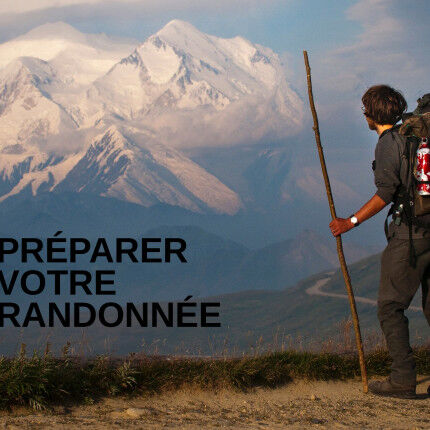
How do you prepare for your walk?
The fine weather is back, and the desire to set off on an adventure in the mountains is growing stronger all the time! The Speck-Sports team would like to give you some advice on how to prepare for a few days' touring.
You need to prepare fora hike! If you set off on an adventure without having planned your trip, you could run into a number of problems! And as the saying goes, "prevention is better than cure"
Preparing your walking itinerary
Maps may be a thing of the past when you're using your car, but in the mountains there's nothing more reliable than a good old map! Prepare your route by studying your walk meticulously. Take into account any technical sections, waterholes, passes, refuges and bivouac sites. It's always important to know your surroundings. In the course of your journey, you may have to change your plans, so it's always essential to be aware of the possibilities offered by theroute you've chosen.
The distance gives you an idea of what you have to cover, but it's above all the positive difference in altitude that you need to take into account in order to progress efficiently and in line with your initial plans. The technical nature of the terrain can also play a role(scree, ice, snow, mud) and slow you down. That's why we insist on knowing as much as possible about the environment in which you're going to be riding.
The weather is also a factor not to be neglected, as it can be decisive. Check it several times before setting off on a mountain range and find out about the state of the trails if there has been any rain in the past few days. Speck-Sports recommends 2 websites to check the weather: Météo YR, Météo Wesserling.
What equipment to pack for your hike
Testing your equipment
You don't have to wait until it's raining to find out how to pitch your tent or put on your Gore-Tex jacket. Testing your equipment before you set off is a matter of course and will help you avoid getting into complicated situations. Don't hesitate to pitch your tent in your garden (or living room) to understand how it's put together. The same goes for your rucksack and shoes. Wear them for several days so that they fit properly.
Remember to make a checklist of everything you want to take with you. Once your bag is ready, keep it at home and cross out anything you didn't need when you get back. This will help you prepare for your next adventure by optimising your pack.
Don't wait until the last minute to pack. Some devices (GPS, portable battery, Go Pro, camera) need time to charge before they can be used, so think about this before you set off under-equipped!
The rucksack:
It's important to choose a rucksack that suits you and your body type. At Speck-Sports, we offer several brands with different types of backpacks to suit different body shapes. Don't forget to prepare it in advance, bearing in mind that you'll be wearing it on your back for several days. Also bear in mind that the larger the backpack you choose, the heavier it will be and therefore the harder it will be to carry. Limiting the size of your rucksack also helps you learn to limit what you take with you.
As for the weight of the bag, you need to bear in mind that what may seem light in your living room will not be so after several hours' walking in the mountains! Think about setting off with an optimised rucksack and avoid adding little last-minute accessories that will only make you feel weighed down.
Clothing:
As well as a good rucksack, it's essential to be properly equipped when you set off on your hiking adventure! These days, we're lucky enough to be able to take advantage of a wide range of technological materials to wick away perspiration, keep warm and protect against UV rays.
For your hike, the Speck-Sports team recommends 3 layers: a light, breathable t-shirt, a fleece or warm jacket, and a gore-tex or waterproof jacket. When you're cold, it's better to have several intermediate layers than one big thick one.
Footwear:
Before your rucksack, a pair of shoes is the equipment that will take you far on your adventure. Everyone knows that the wrong pair of shoes can ruin a hike. It's important to remember that your foot swells when you're walking, so it's a good idea to go one size bigger than your normal shoe size. It may look big in the shop, but once you're in the mountains your feet will thank you. Never take off your shoes in the middle of the day or before the end of your stage! Your feet will start to swell and it can be very difficult to get them back on again.
There are many types of footwear, high or low, with or without a Gore-Tex membrane, with varying degrees of breathability. When you buy your hiking boots, it's essential to bear in mind what you're looking for and to come and try them on in shop, talking to an outdoor specialist. Some brands offer thinner or thinner models, with more or less cushioning, but don't worry! There's something for everyone.
When it comes to the high upper vs. low upper debate, it's worth pointing out that there's no universal answer. Some people prefer a high upper to support their ankle, while others want more freedom. However, the Vibram sole is still a safe bet, as it has proven its effectiveness on technical trails.
Preparing your group hike
Going into the mountains alone is a mistake that could cost you dearly. Rocky paths and snow-covered passes are dangerous, and a wrong turn can happen just as quickly. That's why it's important to always find an adventure companion with whom you can help each other through difficult times. In the event of serious problems, one of you can always go and call for help after having brought your partner to safety. We emphasise that the mountains are a hostile and dangerous environment and that it is important to act with humility so as not to put yourself in danger.
Always remember to take some cash with you in case of a crisis. In fact, there's no point in taking out a credit card in the mountains.

Prepare food and drink for your walk
If you're setting off for several days, it's essential that your calorie intake matches your activity. Water and food are essential to the success of an autonomous trek.
There are two ways of doing this: you can either take freeze-dried food and/or takeaway food with you (but be careful about the volume). Or you can eat in the mountain refuges, but you'll still need to remember to take something to eat with you during the day, because when you're walking in the mountains, your body needs energy.
In any case, you should plan your itinerary carefully when preparing your hike. Choosing to eat in a refuge means that you are dependent on the refuge and that you have to reach it at the end of the day. This leaves you less room for manoeuvre, but will also allow you to walk with a smaller pack.
On the other hand, if you have chosen to bivouac in a tent, then you have far fewer itinerary and timing constraints. However, your pack will be heavier and your average walking speed will be reduced.
Finally, there is also a good compromise, which is to take your tent and bivouac close to the refuges. This way, if you change your programme, you won't be dependent on a hut at night. This type of trek also means that you need to have enough food to eat on your own.
As far as water is concerned, we recommend that you read the article in which we present the different filtration systems. With a system of this type, you can collect drinking water from any source, even if the water is stagnant. However, check your route for water sources. If they are scarce, remember to take plenty of storage capacity with you.
Time management
Good time management is essential in the mountains if you want to make the most of your week and discover the places you've planned! To do this, you need to be at least a little demanding on yourself and accept the constraints of the weather. Choosing to spend 1 or 2 hours next to a lake for a picnic lunch is a good idea, but you'll have to accept the fact that you'll have to walk late in the evening to get to your bivouac.
The most important thing is to divide up your days without being too greedy. There's always a tendency to over-estimate when planning an itinerary. Take into account the fact that you have a pack on your back, that it can be very hot, or that it can storm for several hours at a time. Always reduce your stage by 10% of what you feel able to do. It's better to arrive a little ahead of schedule than to be exhausted in the middle of the mountains, enduring one day after another.
If you're setting off as part of a group, you'll need to agree on the planned stages and on your willingness to complete them, so as to be at the various bivouac sites on time. In summer, nights are booked in advance at the refuges. If you arrive a day late, the hut may be fully booked.
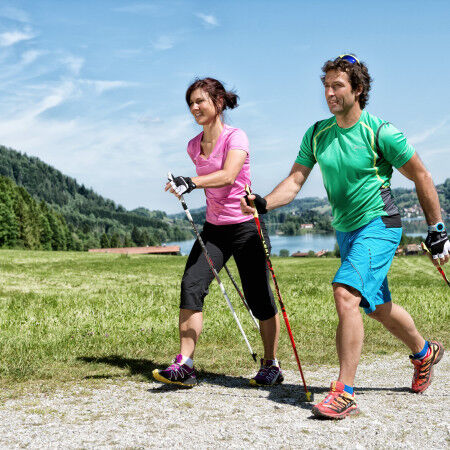
Choosing the right Nordic walking poles depends on a number of criteria. The right choice not only guarantees better performance, but also optimum comfort when you're out walking.
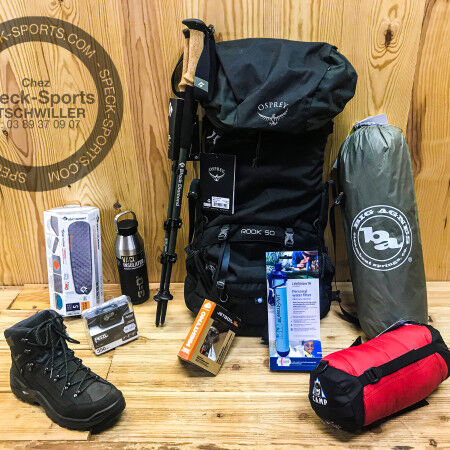
The Speck-Sports team shares its top 10 things to take with you on a hike or bivouac, from rucksacks to stoves: it's essential not to forget anything!
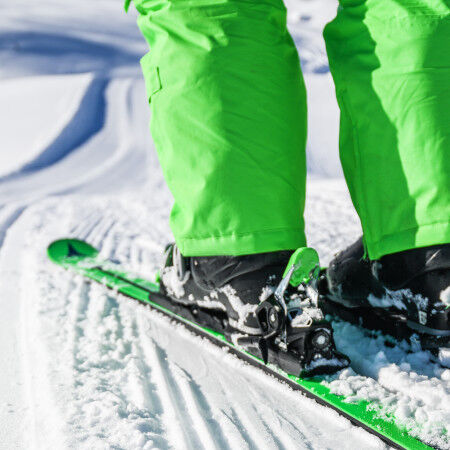
Are you buying a pair of skis and wondering how to choose your ski bindings? Speck-Sports can help.
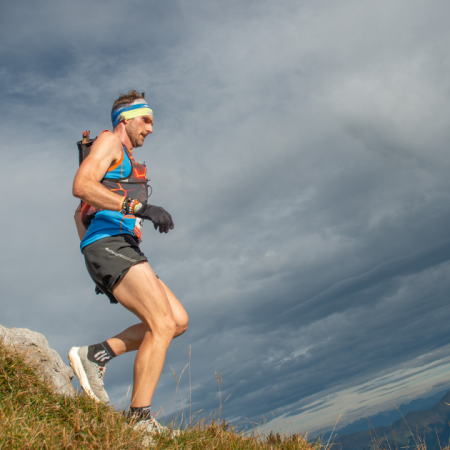
There are many models on the market, depending on the distance you plan to run. In this new guide, we'll look at the criteria for choosing one, the recommended capacity, the different hydration systems, and more…